Catholic Charities Staff Become First Certified Trainers on Updated CCUSA Disaster Case Management Curriculum
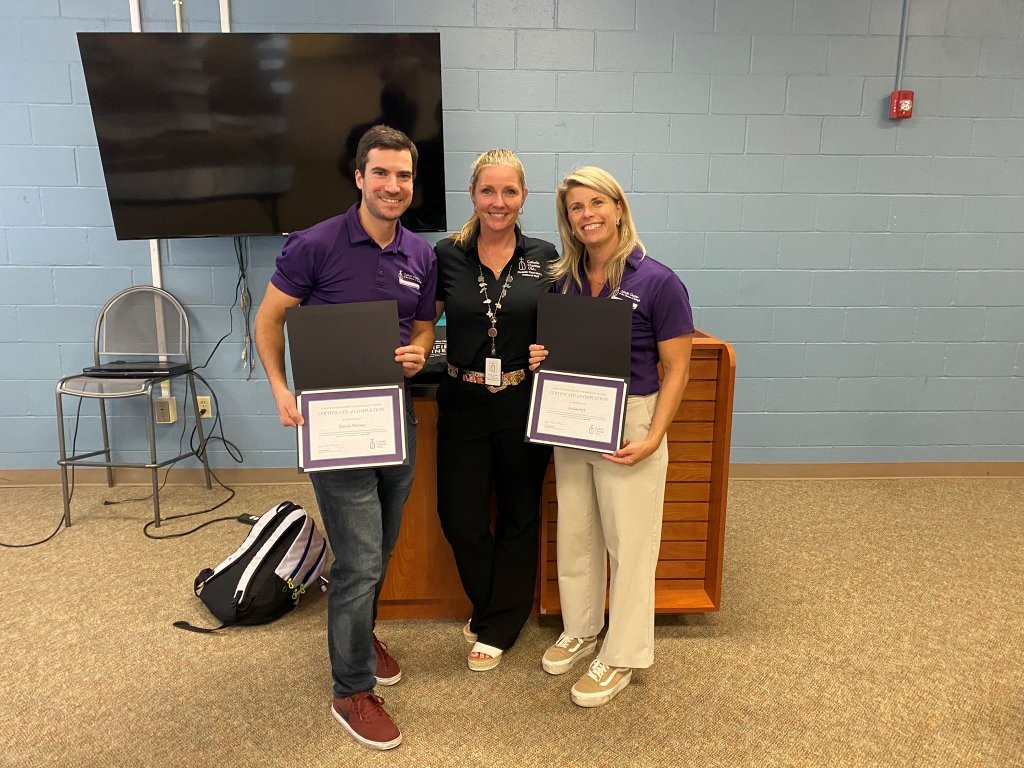
Catholic Charities Diocese of Raleigh is celebrating a new milestone in its disaster preparedness work: Daniel Altenau, Director of Communications and Disaster Services, and Emilie Hart, Cape Fear Regional Director, are the first two individuals across the Catholic Charities USA network to be officially certified to present the newly updated Essentials for Disaster Case Managers curriculum.
The certification recognizes both staff members for their years of experience, preparation, and commitment to strengthening disaster case management capacity in North Carolina and across the Catholic Charities network.
Altenau first began presenting the training in 2017, while Hart began teaching it following Hurricane Florence in 2019. Since then, both have presented versions of the course more than 10 times, individually and together, while also using the curriculum during disaster deployments and recovery efforts.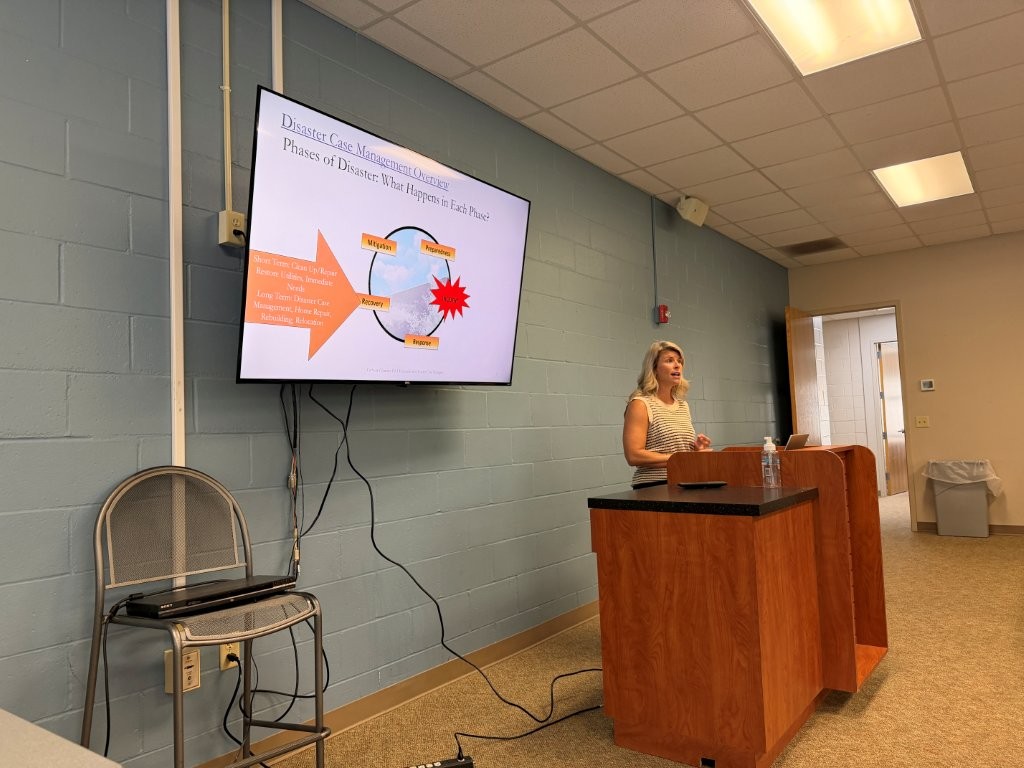
Their path to certification included months of work with Melissa Hruska, Catholic Charities USA Director of Disaster Case Management, as the national curriculum was revised and standardized. Altenau and Hart reviewed and practiced the updated materials, discussed questions with Hruska, and received coaching and feedback to prepare them to present the curriculum consistently on behalf of Catholic Charities USA. Hart recently presented alongside Hruska in Pueblo, Colorado, following devastating wildfires, while Altenau co-presented with Hruska at the National VOAD Conference in May.
“To be the first certified trainers is something we are incredibly proud of,” Altenau said. “It represents close to a decade of investing in this training, disaster case management and preparedness. It also reflects how seriously Catholic Charities approaches blue-sky planning and our role in disaster response and recovery.”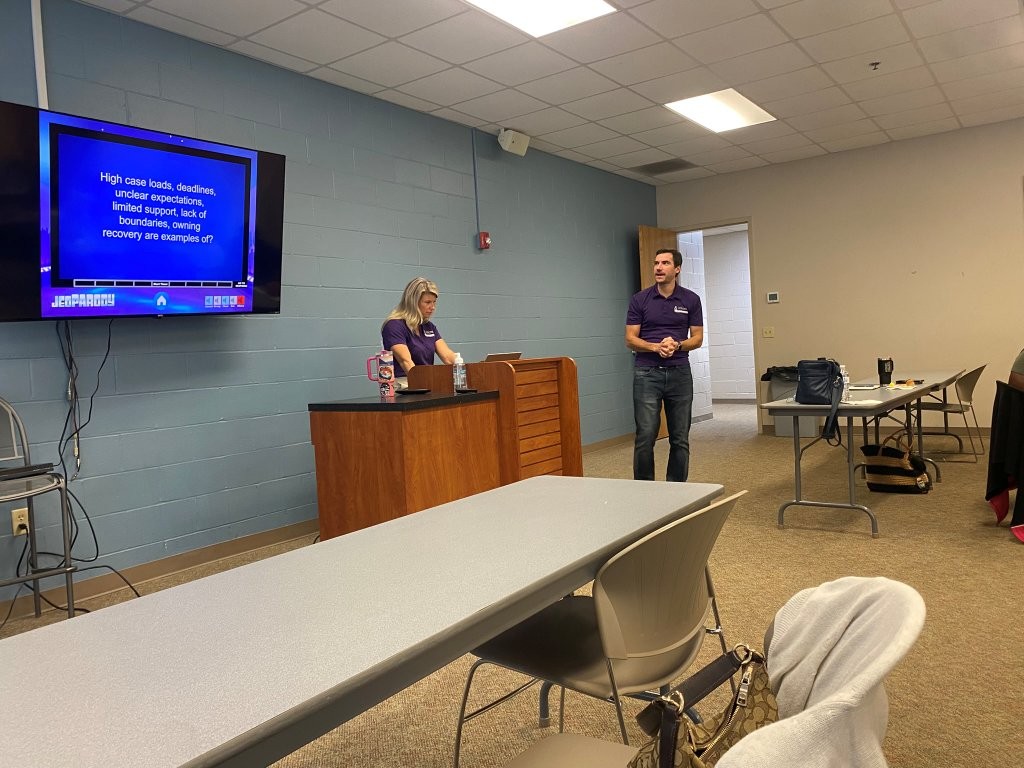
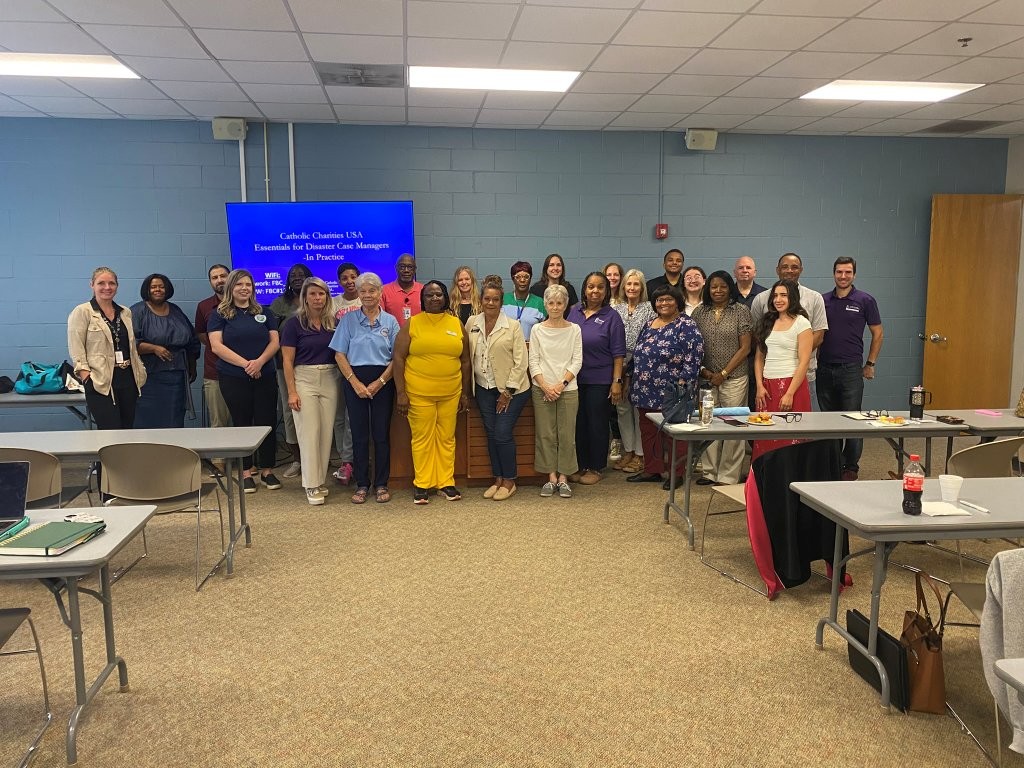
That preparation culminated August 26 and 27 at First Baptist Church in Wilmington. Altenau and Hart co-presented the two-day training with Hruska observing them as the final step in the certification process. At the conclusion of the training, both were officially certified, becoming the first trainers across the Catholic Charities USA network to earn the new designation.
More than 25 participants attended from nonprofits, Long-Term Recovery Groups, and government agencies, primarily from the Cape Fear area, with some traveling from New Bern and Raleigh. The course covers essential topics disaster case managers need to understand before beginning the work and gives participants opportunities to apply that knowledge through activities and facilitated discussion.
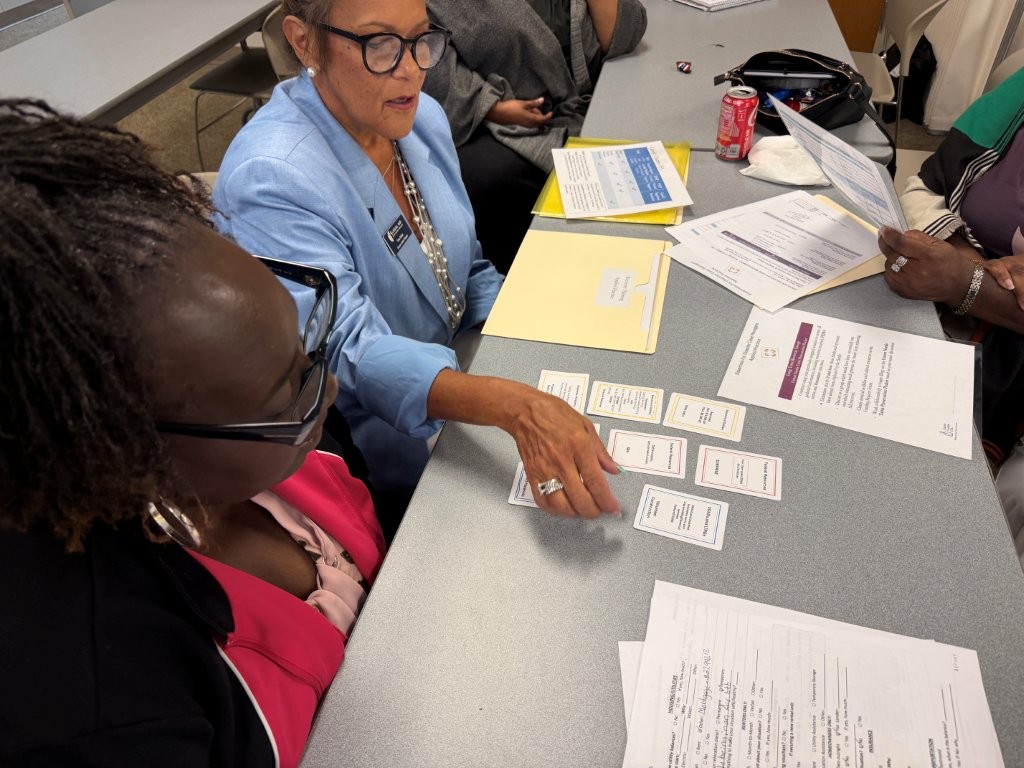
Participants explored FEMA and other disaster resources, working with survivors who may have experienced significant trauma, and developing recovery plans that help families move toward a new normal. A series of activities follows disaster-impacted families from initial intake through navigating resources and ultimately working to fully fund identified recovery needs.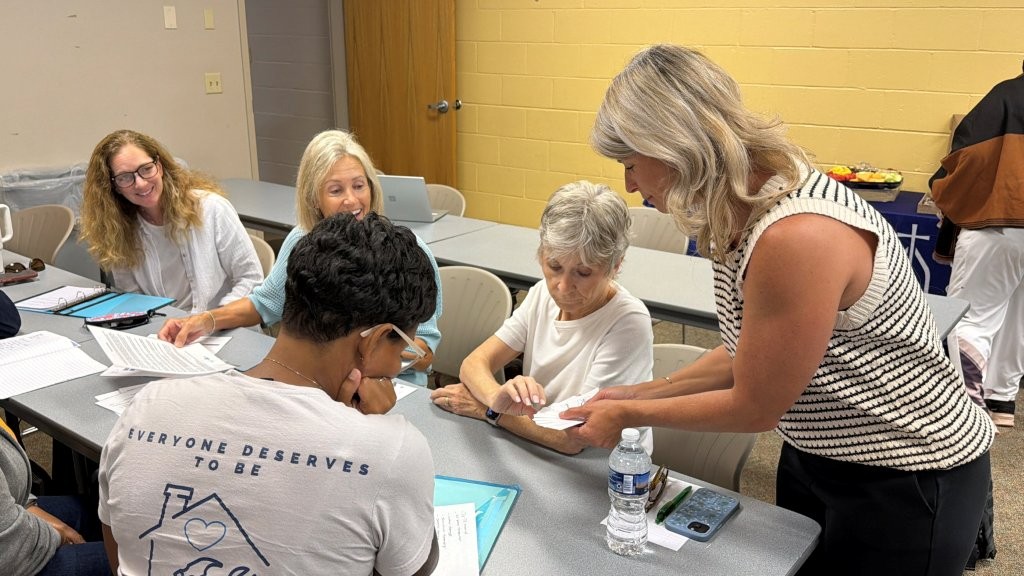
The interactive format also builds relationships before the next disaster occurs. The room grew more energetic as participants worked through cases, asked thoughtful questions and shared their own perspectives. At times, bringing everyone back from an activity was a welcome challenge because conversations were still going.
“Participants aren’t just learning disaster case management concepts, they’re practicing them,” explained Hart. “The applied activities simulate real-world challenges and decision-making, while the gamified approach keeps the room engaged and energized. As people work through cases together, they build relationships and strengthen interagency partnerships. At the end of the day, it takes all of us to see all of our neighbors recover.”
Catholic Charities plans to continue offering the grant-funded training at no cost in communities across North Carolina and stands ready to deploy its newly certified trainers elsewhere in the Catholic Charities network.
For Altenau, while the certification is worth celebrating, the greater goal is preparing communities before the next disaster.
“We want our communities prepared to offer high-quality disaster case management and care for families as they recover and rebuild their lives with dignity,” he said. “Two days may sound like a significant commitment, but once the room starts working together, the time moves quickly. You learn, you laugh, you build relationships, and you leave with skills that make a real difference when a family needs them most.”